Skip to content
SoakRight
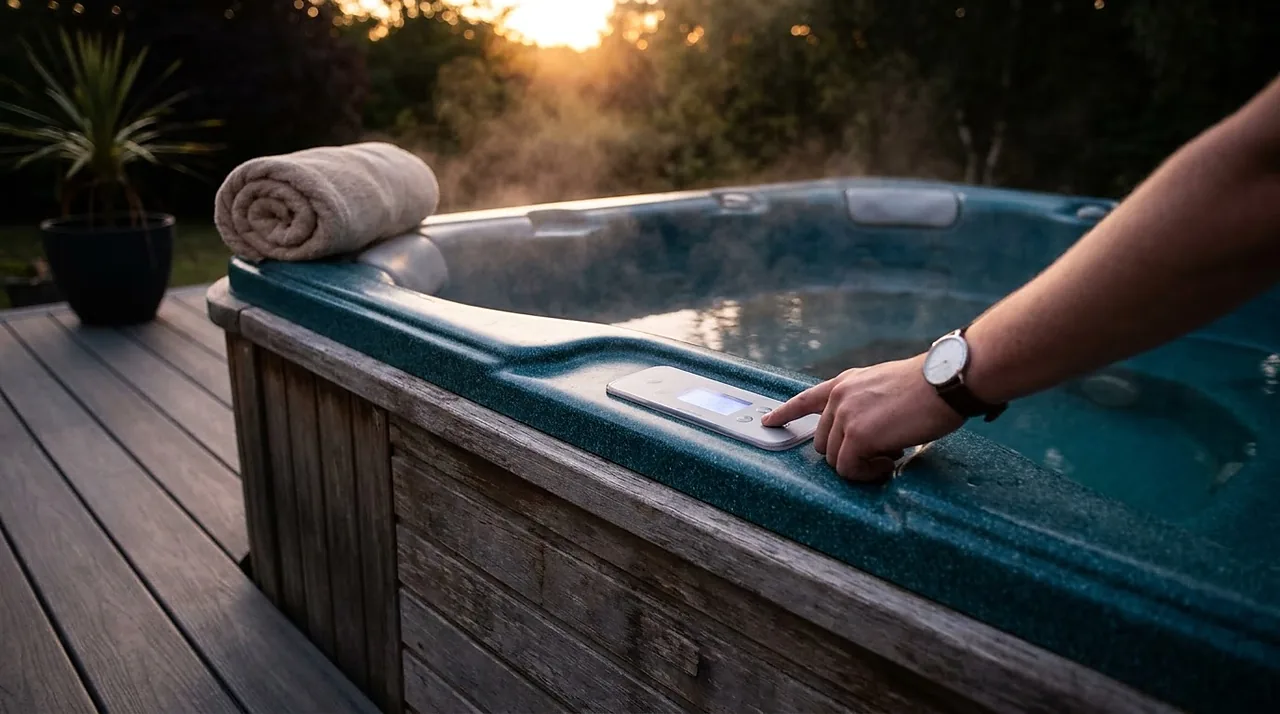
hand adjusting the temperature setting on a hot tub's topside control panel at dusk

Hot tub care, starting from what is actually going on with your tub

Most hot tub guides hand you the same schedule. That helps once the water is behaving. When it is cloudy, cold, foaming or beeping, you need the page for that problem, in the order that fixes it. Pick your situation below.

Work out tonight's doses

Type in your tub's gallons and what your test kit reads. The steps come out in the order to do them: alkalinity, then pH, then chlorine.

Doses assume dichlor at 56% available chlorine and plain baking soda. Check your product label, add half, run the jets 20-30 minutes, and retest before adding the rest. Not sure of your gallons? Find your real number.

What to do, in order

Enter at least one reading to see your steps.

    Water looks wrong

    Something is wrong with the water right now

    cloudy milky white hot tub water viewed close up at dusk

    Check free chlorine (or bromine) and the filter before buying anything. Low sanitizer or a clogged filter is behind most of the problems below, and a clarifier or defoamer only hides them for a day.

    • Cloudy: usually low sanitizer, a dirty filter, or alkalinity and pH out of range. Causes ranked cheapest to fix first, or the fast version if guests are coming in a couple of hours.
    • Cloudy even though every reading is fine: what perfect numbers don't show. Milky right after a shock is often normal for a few hours: when to start worrying.
    • Foam that keeps coming back: soap, lotion and detergent left in swimsuits build up in the water. What actually ends it, and whether it is safe to soak in.
    • Green: copper staining and algae need opposite treatments. Tell them apart before you treat.
    • Strong chlorine smell: it usually means too little free chlorine, not too much. Combined chlorine above 0.5 ppm is the cue to shock. Why adding less makes it worse, and musty and rotten-egg smells.
    • Chlorine that won't hold: chlorine demand and how to break it.
    • Pink slime, flakes from the jets, a greasy ring: pink and mustard gunk, biofilm in the lines, the waterline scum ring.

    Not sure whether to get in tonight? When cloudy or green water means drain first.

    Not sure which one you have?Tap what you see and smell. The symptom finder ranks the likely causes and says if it is safe to get in.
    Cold or beeping

    Cold, beeping, or tripping the breaker

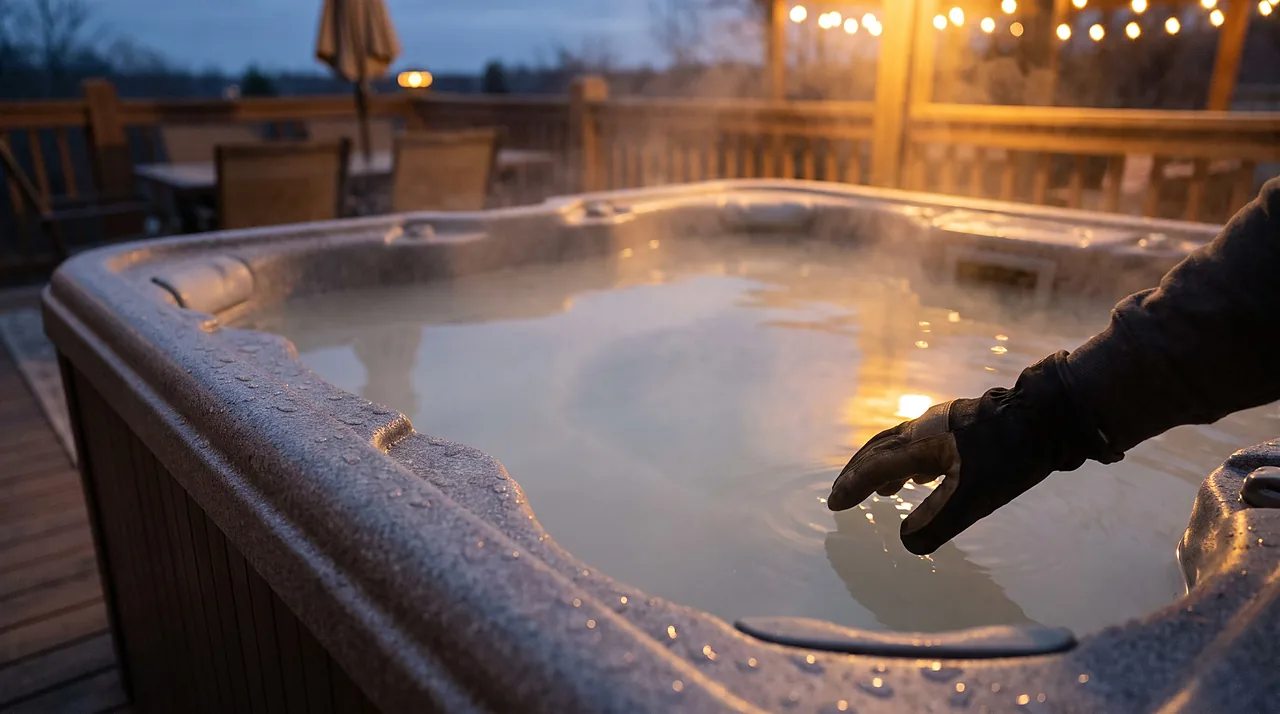
    hand testing hot tub water temperature beside a control panel showing a cold reading

    A heater that shuts off is often protecting itself from low flow, and low flow is often just a dirty filter or an air lock after a refill. Rule out the cheap causes before booking a service call.

    • A code on the panel: FLO, DRY, OH and SN by controller brand, with a separate page on the FLO code.
    • Not heating, or heating slowly: the diagnosis order and normal versus broken heat-up.
    • Breaker or GFCI trips: when it trips tells you where to look. Reading the timing, and trips the moment the heater starts.
    • Weak jets or a noisy pump: weak jets and pump noises, priming after a refill.
    • Panel frozen or blank: how to reset it and find out why.

    If it does come to a part, see what a heater costs versus a service call and what pros charge.

    A code on the panel?Type it in. The code lookup says what it means for your controller and what to check first.
    Just got a tub

    You just got a tub, new or used

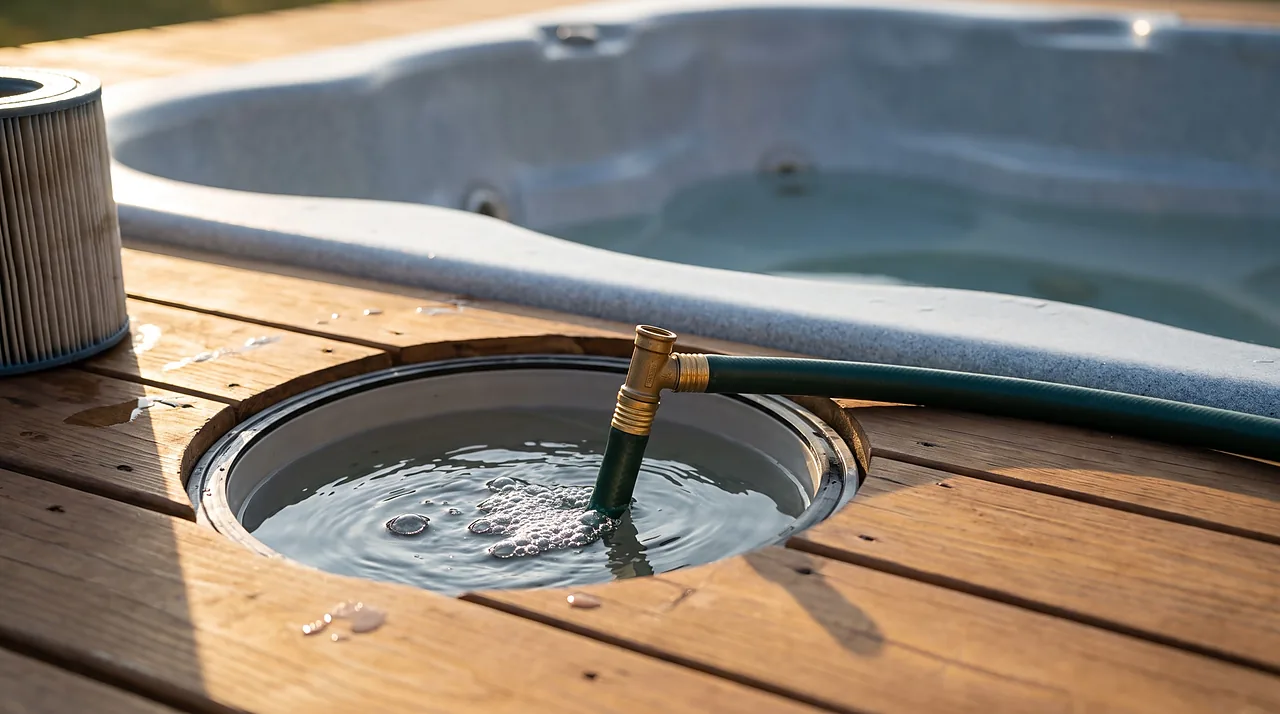
    garden hose feeding water into an empty hot tub filter well to prevent air lock

    A used or inherited tub has old biofilm in its plumbing, which is why gunk comes out of the jets on the first fill. Purge and drain it before you start fresh. With a new tub, start at step 2.

    1. If it is used: purge the lines, drain, and clean the empty shell with the right products.
    2. Know your real gallons, since every dose depends on it: how to find your number.
    3. Fill it, then add startup chemicals in the right order, including a shock on the fresh fill.
    4. Get a test kit that reads what you actually run on: strips versus drop kits, and the short list of chemicals worth buying.
    5. Then switch to the routine: the full maintenance schedule.

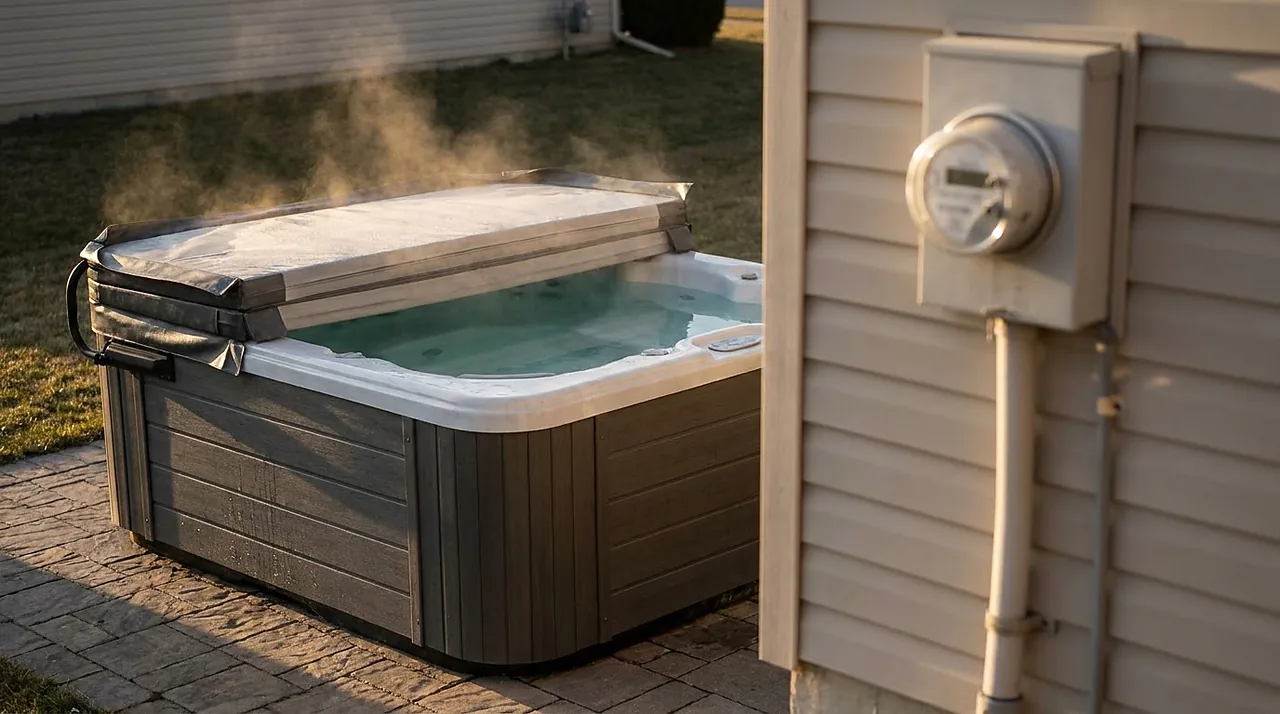
    Still sorting out the hookup? A hardwired tub needs a disconnect within sight of the tub and at least 5 feet from its inside wall, which is what people mean by the "5 foot rule". Electrical requirements in plain words, 120V plug-in versus 240V, and what the inspector checks.

    Numbers won't balance

    Your test numbers never seem to balance

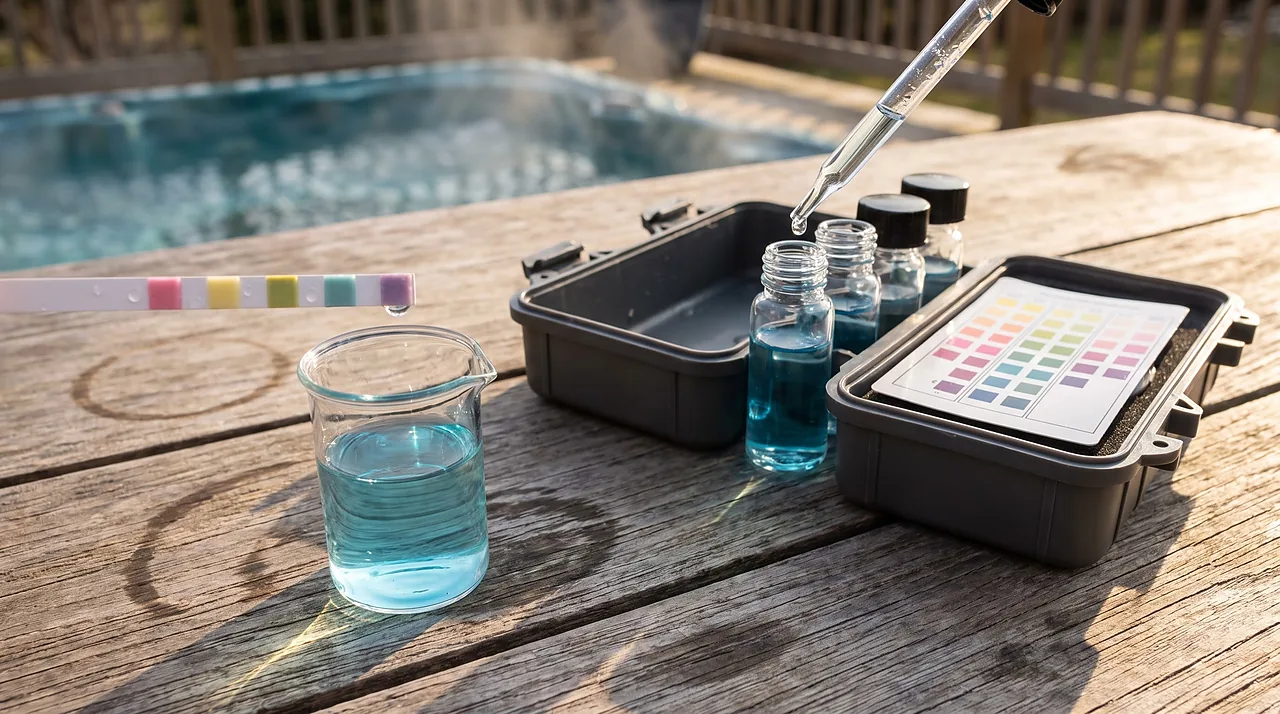
    test strip and reagent drop test kit compared side by side over spa water

    Usually it is the fixing order, not the chemicals. Get total alkalinity into 80-120 ppm first, then pH into 7.2-7.8, then sanitizer. Chase pH before alkalinity and the two keep pulling each other off target.

    Chlorine or bromine

    Chlorine, bromine, salt or something else

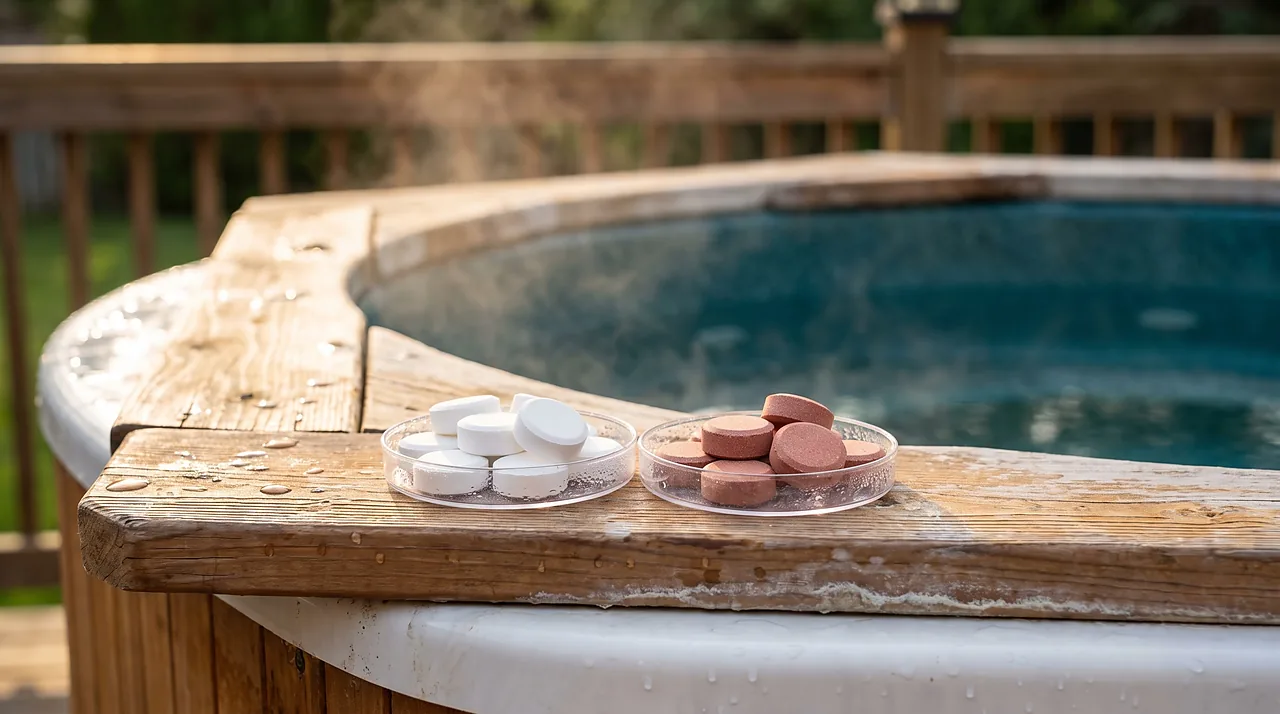
    white chlorine tablets and reddish bromine tablets in small dishes beside a spa

    There is no best sanitizer, only the one that fits how often the tub gets used and how much testing you are willing to do. Going from chlorine to bromine is the easy direction; going from bromine back to chlorine usually means a drain.

    The routine

    The routine once the water behaves

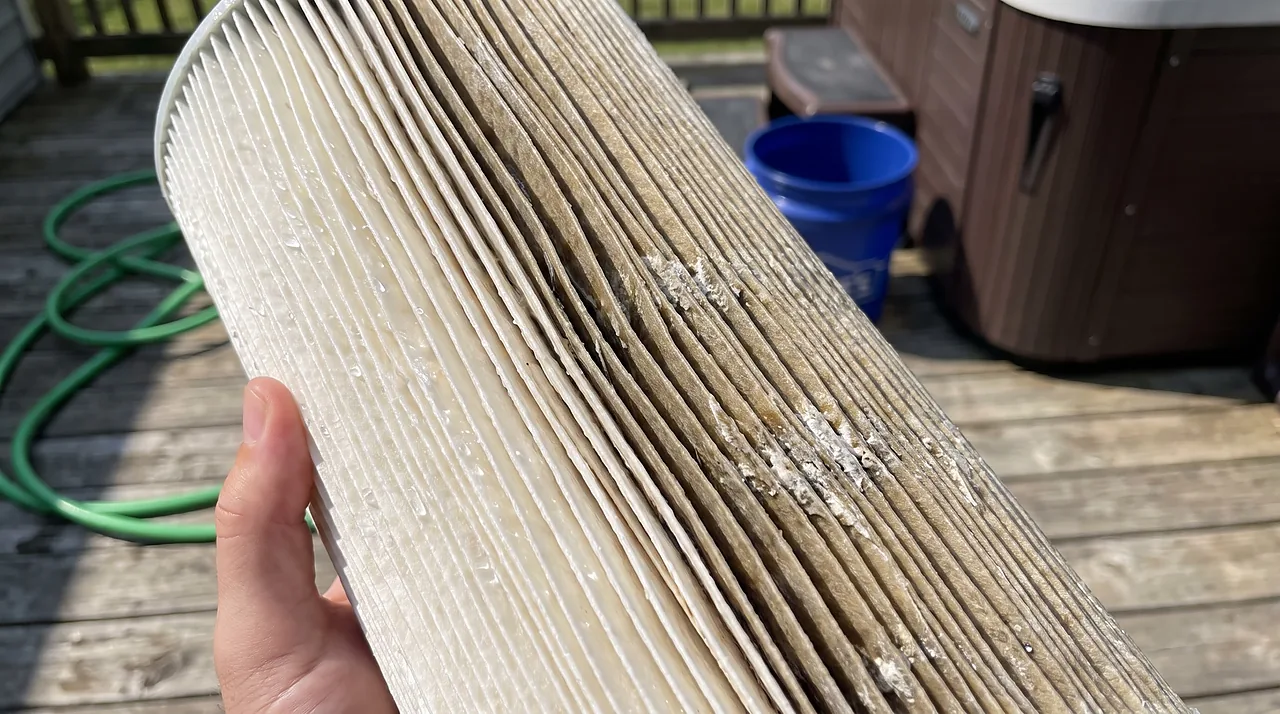
    pleated spa filter cartridge showing clean pleats beside oily discolored pleats

    The weekly part is short: test, adjust, and rinse the filter every 1-2 weeks. The bigger jobs run on intervals: a filter soak monthly, a drain every few months, a new filter every 1-2 years. The full schedule lays it all out.

    hand holding a water test strip above an inflatable spa's waterline outdoors
    Inflatable tub

    Inflatable and soft-sided tubs

    Same chemistry, different rules: fewer gallons, a pump that doesn't run around the clock, and a heater that scale damages faster. Inflatable maintenance, chlorine sized to the real gallons, E90, E96 and E03 codes, not heating, and patching a leak.